
Invisible Aligners vs. Braces: Which Is Right for You?
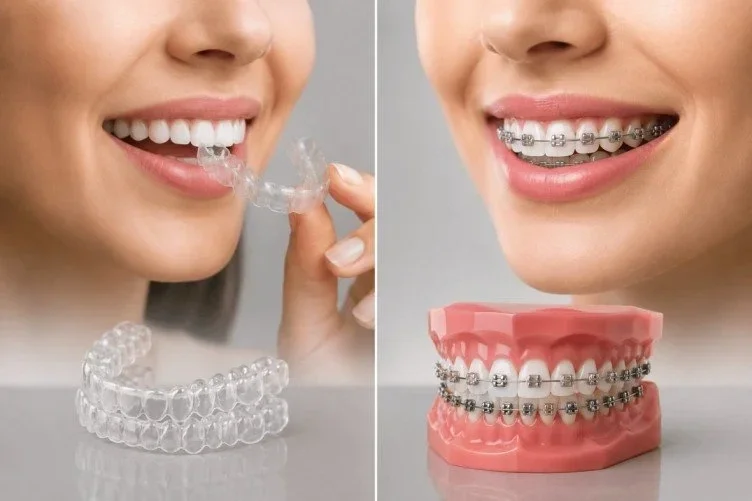
A straighter smile can do more than improve appearance. It can make brushing easier, reduce wear on teeth, and even help with certain bite issues. But when it comes to orthodontic treatment, most people find themselves stuck on one question:
Should you choose braces or aligners?
The answer isn't the same for everyone. Your lifestyle, budget, dental condition, and personal preferences all play a role.
Understanding Invisible Aligners
Invisible Aligners are clear, removable trays designed to gradually move teeth into their ideal position. They're custom-made for your mouth and replaced every few weeks as your teeth shift.
The biggest reason people choose aligners is simple: they're hard to notice.
Whether you're attending meetings, taking photos, or socializing, aligners offer a discreet way to straighten your teeth without the appearance of metal brackets and wires.
Why Traditional Braces Still Matter
Braces have been around for decades for a reason—they work.
Using brackets attached to the teeth and connected by wires, braces apply constant pressure to guide teeth into alignment. Modern braces are smaller and more comfortable than older versions, making treatment easier than many people expect.
For complex orthodontic cases, braces often remain the preferred option.
Comparing Appearance
If aesthetics are your top concern, aligners usually win.
Most people won't notice you're wearing them unless they're standing very close. Adults and teenagers who feel self-conscious about metal braces often prefer this subtle approach.
Traditional braces, on the other hand, are visible whenever you smile or speak. While some patients enjoy customizing them with colored bands, others prefer a less noticeable treatment option.
Which Option Is More Comfortable?
Both treatments involve an adjustment period.
With Invisible Aligners, you may feel pressure when switching to a new set of trays, but no metal brackets are rubbing against your cheeks or gums.
Braces can sometimes irritate, especially after adjustments. However, orthodontic wax and modern bracket designs have made this much easier to manage than in the past.
Treatment Effectiveness
For mild to moderate alignment issues, Invisible Aligners can deliver excellent results.
However, severe crowding, major bite corrections, or complicated tooth movements may respond better to traditional braces. An orthodontist can determine which option is most effective after examining your teeth and jaw alignment.
Cost and Long-Term Value
Costs vary depending on treatment complexity and duration. In some cases, aligners and braces are similarly priced. The real value comes from choosing the treatment that will achieve the best outcome for your specific needs.
A cheaper option isn't always the better investment if it doesn't address the underlying problem effectively.
So, Which One Should You Choose?
If you want a discreet, removable solution and can commit to wearing them consistently, Invisible Aligners are an excellent choice. If your case is more complex or you prefer a treatment that doesn't rely on daily discipline, braces may be the better fit.
The best way to decide is through a professional orthodontic evaluation. Every smile is different, and the right treatment should be based on your unique dental needs, not just trends on social media.
At LS Family Dental, patients receive personalized orthodontic consultations to determine whether aligners or braces are the most effective solution. Their experienced team focuses on creating healthy, confident smiles with treatment plans tailored to each individual.