
Can Dental Implants Get Gum Disease? Understanding Peri-Implantitis
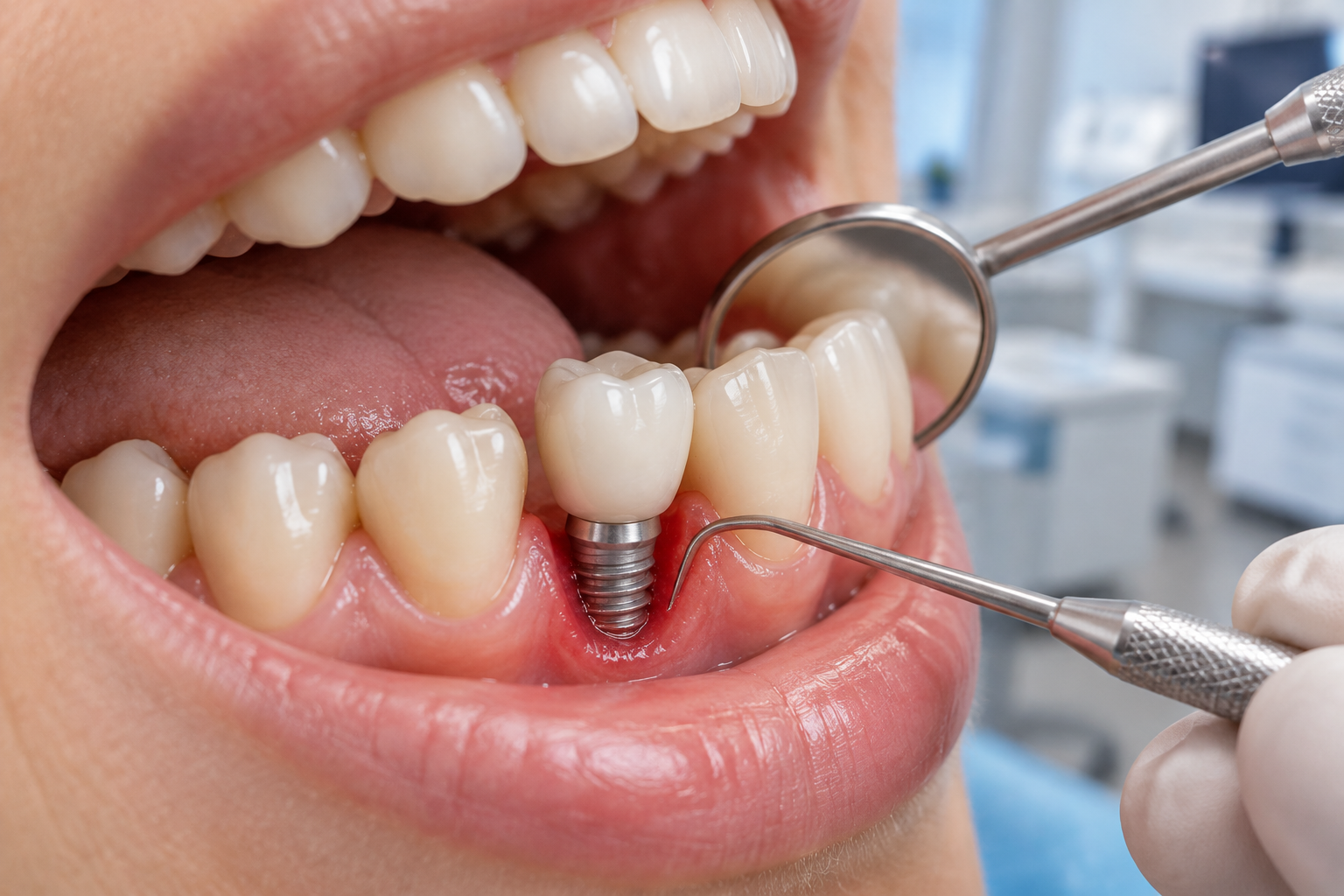
Implants themselves can't get a cavity; that's true. But the gums and bone holding an implant in place are still living tissue, and they can absolutely become inflamed or infected.
If you've got dental implants in Peabody MA, it's worth knowing what peri-implant disease looks like early on, because what starts as simple gum inflammation can quietly progress to bone loss if nobody catches it in time.
Can Dental Implants Get Gum Disease?
Short answer: yes. Implants can develop their own inflammatory conditions around the surrounding tissue. These are called peri-implant diseases.
Peri-Implant Mucositis
This one stays in the soft tissue; the gum around the implant gets inflamed, but the bone underneath hasn't been affected yet. You might notice redness, tenderness, or bleeding when you brush. The good news, according to the American Academy of Periodontology, is that catching it early usually means it's reversible.
Peri-Implantitis
Peri-implant mucositis affects the soft gum tissue around an implant without bone loss. You may notice redness, tenderness, or bleeding when brushing. According to the American Academy of Periodontology, it is generally considered reversible when identified and treated early.
What Causes Peri-Implantitis?
Bacteria and plaque don't care whether a tooth is natural or an implant, they'll collect around the base either way. Once plaque builds up unchecked, the surrounding tissue starts to react.
A few things raise your risk:
Poor plaque control
A previous history of gum disease
Smoking or tobacco use
Diabetes, particularly when it isn't well managed
Skipping regular dental visits
Getting an implant doesn't take daily brushing, flossing, or routine checkups off your to-do list if anything; it makes them more important.
What Are the Warning Signs?
Peri-implant disease doesn't always hurt in the early stages. That's exactly why keeping an eye on it matters so much.
Keep checking for:
Red or swollen gums around the implant
Bleeding while brushing or flossing
Tenderness around the implant
Pus or unusual discharge
Gum recession
A loose or wobbly implant
Notice any of these? Don't wait around for pain to show up before getting it checked out.
How Can You Protect Dental Implants From Gum Disease?
Implants need the same daily attention as your natural teeth, maybe more. The goal is to keep plaque under control around the implant and spot inflammation before it reaches the bone.
Clean Around the Implant Daily
Brush twice a day, and take real care around the implant itself using floss, interdental brushes, or whatever your dentist recommends for your specific case.
Keep Regular Dental Checkups
Professional exams let your dentist track gum health, implant stability, and how well the underlying bone is holding up. Cleanings also reach the spots your toothbrush just can't.
Control Risk Factors
Smoking, poorly managed diabetes, and a history of gum disease all push your risk higher. Getting these under control does real work in protecting the tissue supporting your implant.
Do Not Ignore Early Changes
Bleeding, swelling, tenderness, gum recession, or any looseness deserves a prompt check. Catching things early is almost always simpler than dealing with peri-implantitis once it's advanced.
Conclusion
An implant can look and feel fine on the surface while inflammation builds underneath. Brushing off bleeding gums, swelling, or a slight wobble can put the supporting tissue and bone at real risk.
LS Family Dental handles dental implant care, preventive checkups, cleanings, and gum health evaluations. Our implant process doesn't stop at placement; it includes aftercare guidance on brushing, flossing, and monitoring for changes around the implant.
Already have an implant, or are you thinking about getting dental implants in Peabody, MA? Don't treat placement as the finish line. What happens post-implant matters just as much. Connect with LS Family Dental for an evaluation, and keep your implant backed by healthy gums and real professional care.